
Heat vs Ice: Why We Don’t Just Say “RICE” Anymore
🧊🔥 Heat vs Ice: Why We Don’t Just Say “RICE” Anymore
If you’ve ever rolled your ankle, strained your back, or pulled a hamstring, you’ve probably been told:
“Just ice it.”
For years, the standard advice was RICE — Rest, Ice, Compression, Elevation — created by Gabe Mirkin in 1978. But here’s what many people don’t realise: Even Dr Mirkin has since publicly reconsidered routine icing — acknowledging that aggressively suppressing inflammation may actually delay recovery. And that’s where modern rehab has shifted.
🌿 Enter: PEACE & LOVE
In 2020, Dubois & Esculier published a new framework in the British Journal of Sports Medicine called: PEACE & LOVE. It reflects what research now shows: Inflammation is not the enemy. It is part of the healing process.
🧠 Why We Don’t Rush to “Shut Down” Inflammation
When you injure tissue, your body responds with inflammation. That response:
• Brings immune cells to clean up damaged tissue
• Signals repair processes
• Initiates collagen rebuilding
Some studies suggest that excessive icing may reduce macrophage activity — cells that are essential for tissue regeneration (Takagi et al., 2011, J Appl Physiol). Systematic reviews have also found that while ice can reduce short-term pain, there is limited evidence that it improves long-term healing outcomes (Bleakley et al., 2004; van den Bekerom et al., 2012).
So what does that mean?
👉 Ice is a pain-modulation tool.
👉 It is not a healing accelerator.
That’s an important distinction.
🌿 What PEACE Means (Early Phase)
P – Protect
Short-term unloading if needed — but not complete rest.
E – Elevate
May help manage swelling.
A – Avoid anti-inflammatories
We don’t want to blunt a necessary biological process unless truly indicated.
C – Compress
Can help manage excessive swelling.
E – Educate
Healing takes time.
There is no magic shortcut. Notice what’s missing? Ice is not the centrepiece anymore.
❤️ What LOVE Means (Recovery Phase)
This is the part most people skip — and the part that actually matters most.
L – Load
Progressive loading stimulates tissue repair and proper collagen alignment.
O – Optimism
Your mindset influences recovery. This is strongly supported in pain science literature.
V – Vascularisation
Early pain-free cardiovascular movement improves circulation and tissue nutrition.
E – Exercise
Restores strength, coordination, and confidence.
The research is increasingly clear: 💪 Gradual loading drives recovery more than temperature does.
🔥 Where Does Heat Fit In?
Heat isn’t part of PEACE either — but that’s because both heat and ice are considered supportive tools, not primary treatments.
Heat can:
• Improve short-term flexibility
• Reduce muscle stiffness
• Increase local blood flow
• Improve comfort before movement
Cochrane reviews suggest heat may help acute and subacute low back pain in the short term (French et al., 2006).
But again: Heat improves comfort. It doesn’t “heal” tissue faster.
❄️ So Should You Ice or Not?
Here’s how we explain it in clinic:
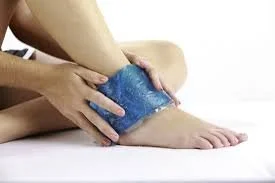
If it’s very fresh, swollen and painful → Ice is reasonable for short bursts to manage pain.
If it’s stiff, tight, or lingering → Heat may help you move more comfortably.
But neither replaces:
• Appropriate load management
• Gradual return to activity
• Strength work
• Nervous system recovery
🧬 The Bigger Picture
What we now understand is that healing is biological, not mechanical. You cannot freeze your way to recovery. You cannot heat your way to recovery. You can load your way to recovery — progressively and intelligently. That’s where good guidance matters.
💬 What We Tell Patients
We are less concerned about whether you choose heat or ice. We are more concerned about:
• Are we protecting it just enough — but not too much?
• Are we gradually reintroducing load?
• Are we supporting the nervous system?
• Are expectations realistic?
Because real recovery isn’t about temperature. It’s about adaptation.
If you’re unsure what phase your injury is in or whether you’re under-loading or over-loading — that’s where an assessment helps. At Body Care Health & Chiropractic, the goal isn’t just symptom relief. It’s helping your body do what it was designed to do.